
Loading...
Serving Corpus Christi, TX and surrounding areas. (361) 260-1127
Every Gulf Coast downpour makes your pothole bigger. We cut back to solid asphalt, check the base, and compact the patch so it holds.
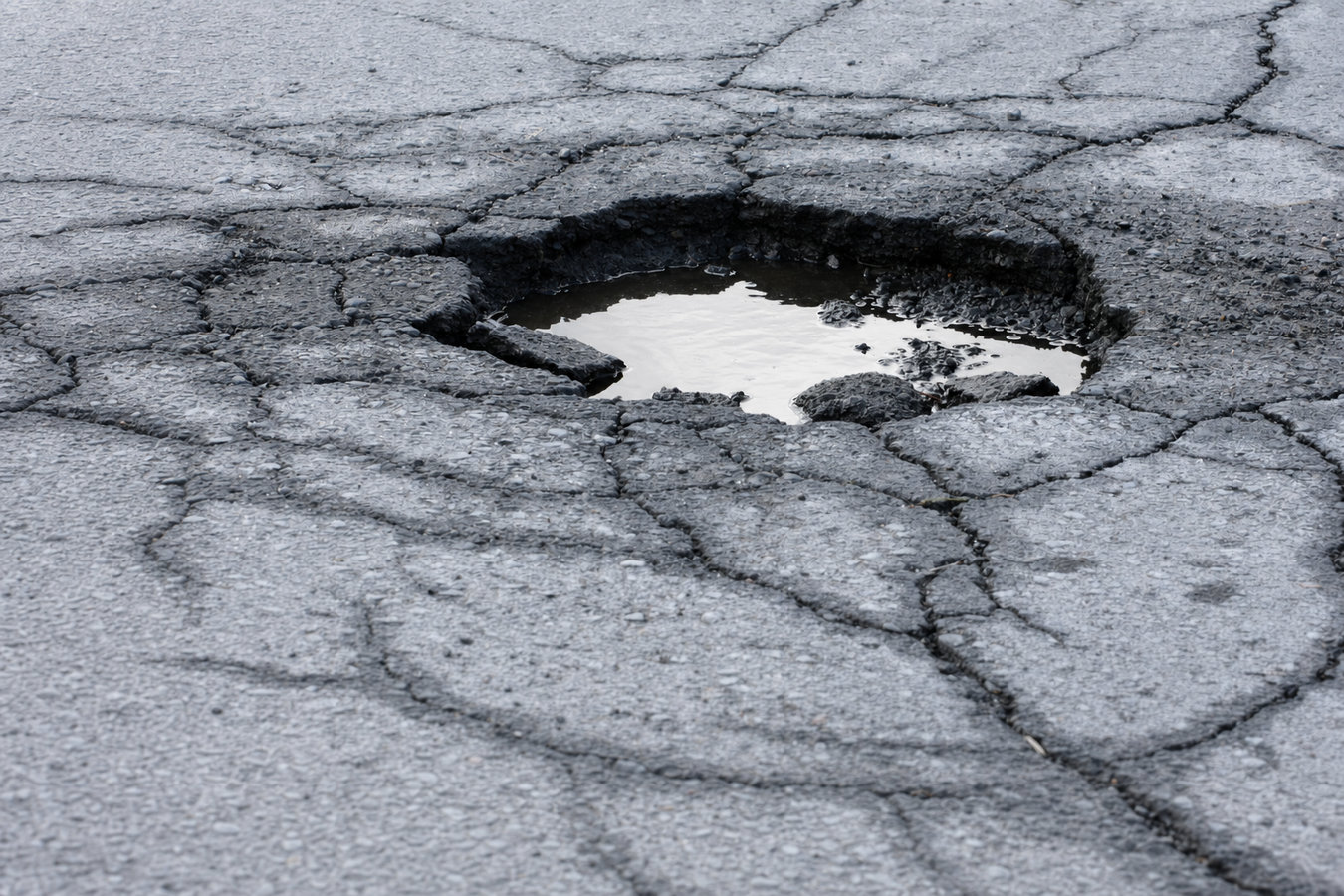
Pothole repair in Corpus Christi involves cutting back to solid asphalt, cleaning the area, checking the base for clay soil movement, and compacting hot-mix asphalt flush with the surrounding surface - most single-pothole jobs are done within a few hours.
The problem with most pothole repairs that fail is skipping the base check. Corpus Christi sits on heavy clay soils that swell when wet and shrink when dry. That movement opens holes from below - and a surface-only patch will crack again after the next Gulf Coast downpour. Our pothole repair process starts at the base, not just the surface.
If your driveway has deeper damage or widespread surface cracking, a broader asphalt repair assessment may be the right first step to understand what the whole driveway needs.
If you can see a depression, bowl, or open hole where asphalt has broken away, that is a pothole and it will only grow. In Corpus Christi's wet-dry cycles, water gets into the void after every rain and the clay beneath shifts, so the damage spreads faster than it would in a drier climate.
When the edges of a crack start to break apart and you can kick loose chunks of asphalt with your foot, the surface has lost structural integrity in that spot. This is the stage just before a full pothole opens - catching it now costs less than waiting for the hole to form.
If you feel a distinct jolt pulling into your driveway, the surface has dropped or broken enough to create an uneven edge. Beyond the annoyance, that edge catches water and grows with every Gulf Coast downpour.
Pooling water in a low spot is a warning sign that the surface has settled or the base has eroded beneath it. In Corpus Christi's heavy rain events, that pooled water is actively working to turn a soft spot into a pothole.
We handle pothole repair on residential driveways and private commercial lots across Corpus Christi. Whether you have a single crater that appeared after a storm or a driveway with multiple failures, we start by probing the area to see whether the base has shifted before we fill anything. Skipping that step is the most common reason patches fail - especially on Corpus Christi clay soils where the ground moves with every wet and dry cycle.
For driveways with surface-level potholes and a sound base underneath, a hot-mix patch with sealed edges is typically all that is needed. For areas where the base has washed out or eroded, we rebuild from below before laying new asphalt. Once the patch has cured, we can also apply grading and excavation or a sealcoat over the repaired area and the surrounding driveway to protect the new work and extend the life of the whole surface.
Best for driveways with one or two isolated failures and a structurally sound base underneath.
Suited to driveways or lots with several failures spread across the surface that have not yet reached the point of full replacement.
For potholes where the clay base has shifted, washed out, or failed - the right fix when patches keep coming back in the same spot.
A protective sealcoat applied after the patch cures blends the repair visually and shields both old and new asphalt from Corpus Christi UV and rain.
Northern states blame freeze-thaw cycles for pothole damage. Corpus Christi has its own combination that is just as destructive: heavy Gulf Coast clay soils that swell and shrink with every rain, intense UV that oxidizes asphalt binders and makes them brittle, and a storm corridor that drops bursts of heavy rain from June through November. Those three factors together accelerate pothole formation faster than most homeowners expect, and they also mean that a shallow cold-pour patch will not hold here the way it might in a drier climate.
We work across the entire Corpus Christi area, including Flour Bluff, where low-elevation lots and frequent flooding put extra stress on driveway bases, and Calallen, where newer driveways on expanding subdivisions are starting to show the effects of clay soil movement. Every area we serve gets the same approach: check the base before filling the hole.
Call or submit the form and we will reply within one business day. A real person will come out to look at the damage before quoting - no phone estimates on pothole depth.
We probe the area to see how deep the failure goes and whether the clay base beneath has washed out. In Corpus Christi, a base problem is more common than most homeowners realize, and flagging it before starting work keeps costs predictable.
The crew saws back to solid asphalt on all sides, cleans out debris and water, and fills with hot-mix asphalt in layers. Each layer is compacted with a roller or plate compactor until the patch sits flush with the surrounding surface.
Edges are sealed to prevent water from sneaking back underneath. In Corpus Christi's summer heat, fresh asphalt stays soft longer, so we give you a clear stay-off window - typically one full day, sometimes more.
We come out, check the base, and give you a written quote - no surprises on price or scope.
(361) 260-1127We probe the pothole area before quoting, not after starting work. If the clay base has shifted or washed out, we tell you upfront and fix it before laying new asphalt. That is why our patches do not come back in six months.
We use hot-mix asphalt specified for high-temperature conditions, not cold-patch bags from a hardware store. The material bonds correctly, compacts tightly, and holds up through Corpus Christi summers without softening and rutting.
Texas requires paving contractors to hold a current state license, and you can verify ours through the Texas Department of Licensing and Regulation. Hiring a licensed contractor gives you a clear path to recourse if something is not done right.
You receive a written estimate that describes exactly what we are doing and for what price. No verbal-only quotes, no on-the-spot pressure. You compare and decide on your schedule.
When a pothole repair is done right, it holds through storm season and another full South Texas summer. When it is done wrong, you are calling again in six months and paying twice for the same hole.
When the base beneath your driveway has failed, proper grading and excavation before repaving is what makes the new surface last.
Learn MoreBroader surface damage across your driveway - cracks, crumbling edges, and depressions - calls for a full asphalt repair assessment beyond a single-hole patch.
Learn MoreEvery rain event pushes more water into that hole and softens the base beneath it. Call now and we will get out there to assess and quote - no cost, no obligation.