
Loading...
Serving Corpus Christi, TX and surrounding areas. (361) 260-1127
A crack or pothole that looks minor now gets much worse after the next Gulf storm. Addressing it early costs a fraction of what full replacement does - and protects what is underneath.
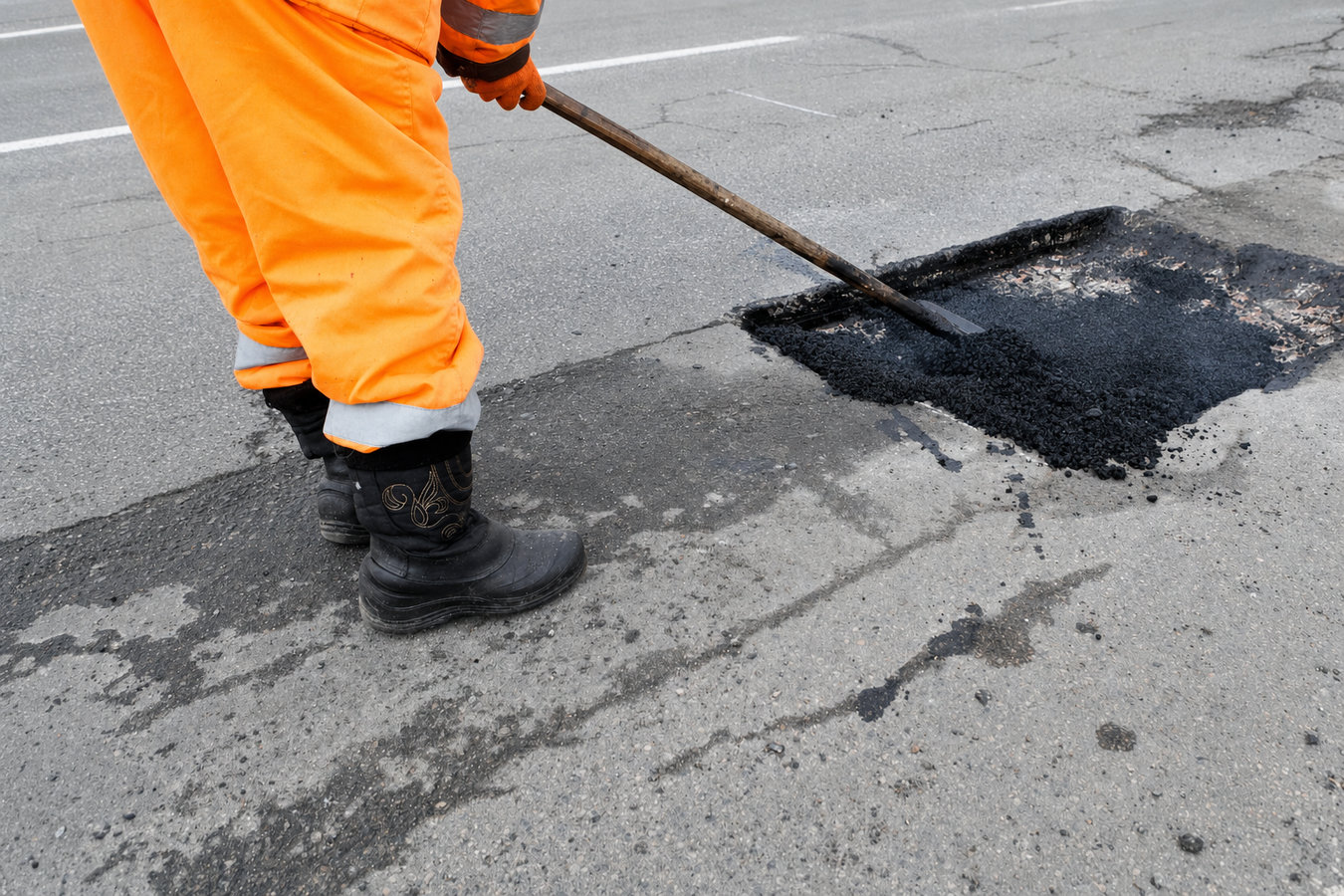
Asphalt repair in Corpus Christi means cutting out or treating the damaged area, stabilizing the base underneath if needed, and placing fresh material that bonds tightly to the surrounding surface - most residential repairs are finished in a single day.
The difference between a repair that holds and one that fails within a season comes down to what happens before the new asphalt goes in. Clean, straight saw-cut edges allow the patch to bond properly. A stable, compacted base means the repaired section has something solid to sit on. In Corpus Christi, where clay soils shift under the surface and Gulf rain events can erode a base quickly, skipping either step is how a patch ends up cracking again in six months. If the damage covers a larger area, our asphalt crack sealing service may be a cost-effective first step for surface cracks that have not yet reached the base.
A well-done repair is flush with the surrounding surface, drains water away rather than holding it, and has tight seams that do not lift or gap at the edges. Those are the signs that the prep work underneath was done correctly.
A pothole or depression means the base beneath the surface has weakened or washed out. In Corpus Christi, heavy tropical rain events can erode the material under asphalt quickly, turning a small soft spot into a hole that grows with every vehicle that crosses it. Once a pothole forms, it gets bigger after each storm.
A network of small, connected cracks spreading across an area means the base underneath has likely shifted or failed. This pattern is common in Corpus Christi because the clay soils beneath the surface move with every wet-dry cycle throughout the year. Individual crack sealing will not hold at this stage - the damaged section needs to be cut out and rebuilt.
Edge cracking happens when the sides of the pavement lose support - soil erodes or settles away from the edge, and the asphalt begins to break at the border. Repeated wet-dry cycles in coastal soil make this particularly common in Corpus Christi. Left alone, edge cracks work their way inward and eventually require a much larger repair.
If water pools on your driveway after a storm rather than running off, the surface has settled unevenly or the drainage slope has been compromised. In a city that sees intense tropical rain, standing water is not just a nuisance - it actively breaks down the asphalt base and accelerates failure beneath the surface.
We handle the full range of asphalt repair, from isolated pothole patches to larger section replacements where the base needs to be rebuilt before new material goes down. Every repair starts with an honest assessment: we look at the surface damage, check the base condition underneath, and check how water is moving across and away from the area. For isolated surface cracks that have not yet penetrated to the base, we may recommend asphalt crack sealing as a first step - a flexible filler applied to narrow cracks that keeps water out and slows further damage at a lower cost than a full-depth repair.
When damage has progressed further and sections need to come out completely, we use targeted pothole repair methods - saw-cutting clean edges around the damaged area, addressing the base if it has eroded or softened, and compacting fresh asphalt that bonds tightly to the surrounding pavement. We do not just fill holes - we fix what caused them.
For areas where the base has failed - we cut out the damaged material, stabilize the base, and install new asphalt that bonds cleanly at every edge.
For isolated holes or depressions - we remove loose material, compact the base, and fill with fresh asphalt to a flush, draining surface.
For crumbling or separating driveway edges - we cut back to stable asphalt, address the soil support, and restore the border with properly compacted material.
For narrow surface cracks that have not yet reached the base - a flexible filler that blocks water entry and buys additional service life.
Three conditions make asphalt repairs fail faster in the Coastal Bend than in most other markets. First, the expansive clay soil that runs through much of Corpus Christi moves constantly - swelling when wet and contracting when dry - which puts stress on the base from below. A repair that only addresses the surface without stabilizing the base will crack again when the soil cycles through its next wet season. Second, the sustained summer heat here regularly exceeds 95 degrees, which softens asphalt that was not mixed for high-temperature performance. That means using the right material for this climate, not a one-size-fits-all mix. Third, Corpus Christi is in the Gulf Coast hurricane belt, and tropical rain events can erode a compromised base in a single storm. The National Asphalt Pavement Association provides guidance on mix standards and maintenance practices that apply to high-temperature, high-humidity markets like ours.
We work across the Corpus Christi area and understand the soil and drainage conditions that vary neighborhood to neighborhood. Homeowners in coastal communities like Flour Bluff deal with the added challenge of salt air accelerating surface oxidation, while areas like Ingleside see clay soil movement as the primary driver of cracking and base failure.
We come to your property and walk the damage with you. That means looking at the surface, checking what the base feels like underneath, and assessing how water moves across the area. You get a written estimate explaining what work will be done and why - not just a price. We respond within one business day of your inquiry.
We schedule the job during a dry window - fresh asphalt needs rain-free conditions to bond and cure correctly. If your repair involves the driveway apron or a drainage easement, we confirm whether any permit or right-of-way approval is needed before we schedule.
The crew saw-cuts clean edges around the damaged section, removes old material, and addresses the base if it has softened or eroded. This step is what separates a lasting repair from a temporary fill - clean edges and a stable base are what make the new asphalt hold.
We tell you exactly how long to stay off the repaired section - at minimum 24 hours for foot traffic and longer for vehicles, with extra time needed in summer heat. We also advise on when to schedule a sealcoat over the repaired area to protect both old and new surfaces.
Free on-site estimates. Written quote explaining exactly what work will be done. No surprise charges after the job.
(361) 260-1127We do not pour asphalt over a compromised base and call it done. Every repair includes a check of the base condition beneath the damaged area. If the base has softened, eroded, or shifted - which is common given Corpus Christi's clay soils and drainage conditions - we address that first. A patch over a bad base fails within a season.
Corpus Christi's sustained summer heat above 95 degrees requires asphalt material formulated to stay stable in high-temperature conditions. We use a mix suited for this climate, not a generic blend. The difference shows up in whether a repair holds its shape through August or begins to rut and soften under normal traffic.
We tell you which repair actually fits your situation. If targeted patching makes sense, that is what we recommend. If the surface damage is widespread enough that repair is just delaying a replacement, we say that too. A contractor who always recommends the bigger job is not working in your interest.
You receive a written scope of work before any repair begins - explaining what we will do, how we will do it, and what the finished repair should look like. The Texas Department of Licensing and Regulation requires paving contractors to hold a state-issued license - we are licensed and carry full liability coverage so you are protected if anything goes wrong on your property.
A good asphalt repair in Corpus Christi is not just filling a hole - it is understanding what caused the hole and fixing that too. When the base, the drainage, and the material are all addressed correctly, a repair holds for years rather than one rainy season.
For narrow surface cracks that have not yet reached the base - a cost-effective first step that blocks water entry and extends the life of your current surface.
Learn MoreDedicated pothole repair for driveways and parking areas where holes have formed and grown through storm damage or base failure.
Learn MoreThe next Gulf storm season will make it worse. Call now or request a free on-site estimate and we will get back to you within one business day.